
Creator Radar: 5 World Cup 2026 Angles Hiding Around the Crowd
Five World Cup 2026 creator angles with visible demand but room for small teams to own the story: Ghana's Toronto celebration, Cabo Verde's diaspora map, away-fan America reviews, Korean-language watchrooms, and no-footage shadow broadcasts.

The best Creator Radar ideas this week are not the goals themselves. They are the crowd behaviors around the goals: who filled the square, who made a road trip feel like a content series, and who watched through a creator instead of a broadcaster.
| Angle | Why it is still uncrowded | Best creator format | Demand signal to watch |
|---|---|---|---|
| Ghana's Toronto after-party | Major coverage treated Ghana's 1-0 win over Panama as a match story; the creator opening is the Greater Toronto Area Ghanaian street celebration after Caleb Yirenkyi's 95th-minute winner. 1 2 | Street-documentary Short or 8-minute neighborhood map | CP24's fan-gathering video had 20,770 YouTube views in the first few days, while CityNews' celebration clip had 16,294. 3 4 |
| Cabo Verde's 11th Island | Everyone has noticed the fairytale draw; fewer creators have explained how a country of about 561,000 residents can have a diaspora larger than its home population. 5 | Diaspora explainer, family-history mini-doc, fan map | FIFA's Team Feature video on Cabo Verde's global diaspora had 51,902 views; WSB-TV's Atlanta segment on the Spain draw had 9,547. 6 7 |
| The America review by away fans | Sports desks are writing politics, heat, and logistics. Travel creators can own the stranger, more human frame: visitors rating Waffle House, ranch dressing, Buc-ee's, Kansas City barbecue, and American friendliness. 8 | Host-city food diary, foreign-fan reaction series, "first time in America" collab | The Los Angeles Times called "visitors in America" social media's song of the summer, and The Japan Times reported that visiting-fan posts were flooding social feeds. 9 |
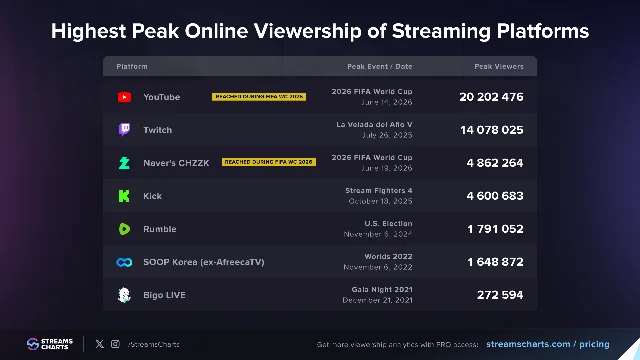
| Korean-language World Cup rooms | Creators are likely to cover South Korea as a team story. The underused lane is Korean-language distribution: CHZZK's record stream audience, LA Koreatown identity videos, and bilingual fan rooms. 10 | Bilingual watchroom tour, platform explainer, diaspora interview | Streams Charts reported 15.5 million World Cup-related hours watched in South Korea and a 3.86 million peak for JTBC's CHZZK channel during South Korea vs. Czech Republic. 10 |
| The shadow-broadcast economy | Rights-holder stories are crowded. The easier creator lane is legal, no-feed formats: radio commentary, simulations, watchalongs, and community rooms where fans cannot or will not watch the official feed. 10 | Creator-economy breakdown, "how to cover matches without footage" tutorial | Streams Charts found YouTube accounted for 94% of tracked World Cup-related hours watched from June 11-18, while independent commentary and simulation channels still generated million-hour audiences in Argentina, Bangladesh, Japan, Korea, Indonesia, and Mexico. 10 |
1. Ghana's Toronto after-party
Video title hook: "Toronto turned into Accra after one 95th-minute goal"
The match fact is simple: Ghana beat Panama 1-0 at Toronto Stadium after Caleb Yirenkyi scored in the 95th minute. FIFA framed it as a late winner that denied Panama a first World Cup point. 1 The creator story starts after the whistle. The Toronto Star reported thousands of Ghanaian supporters singing, chanting, and dancing at Yonge and Dundas after the rain-soaked match, and it cited an estimate of 50,000 Ghanaians in the Greater Toronto Area. 2

This is uncrowded because the default video is either highlights or crowd montage. A better small-team creator can make it local and useful: where people gathered, what songs traveled, which restaurants and churches became the unofficial fan infrastructure, and why a one-goal opener mattered enough to pull people into the street.
Best platforms and formats: TikTok and Reels for a fast street edit; YouTube for an 8-10 minute diaspora map; LinkedIn only if the piece is framed around host-city community economics.
Search/social signal: YouTube already has multiple small-to-mid clips around the scene. CP24's long fan-gathering video had 20,770 views, and CityNews' short celebration package had 16,294. 3 4 That is enough demand for a creator who can add names, routes, and context instead of reposting noise.
正在加载内容卡片…
2. Cabo Verde's 11th Island
Video title hook: "The tiny World Cup team whose biggest fanbase lives abroad"
Cabo Verde has been covered as a fairytale team, but the richer creator angle is the infrastructure behind the fairytale. OkayAfrica reported that Cabo Verde has about 561,000 residents and more than 1 million people in the diaspora, then tied that diaspora identity to the team's debut 0-0 draw with Spain and its sudden crowd-favorite status. 5 Olympics.com added a useful creator detail: the squad reflects players based across 14 countries, with all 11 starters in the decisive qualifier foreign-based. 11
The low-competition path is not "Cabo Verde shocked Spain." That headline is taken. The open lane is "how a scattered nation becomes visible for one month." A creator in Boston, Brockton, Atlanta, Rotterdam, Lisbon, Paris, or Providence can build a stronger episode than a general sports page because the story lives in families, bars, flags, remittance routes, and language.
Best platforms and formats: YouTube mini-doc for the diaspora network; Instagram carousel mapping the 11th Island; TikTok interview clips with one question: "Where were you when Cabo Verde got its first point?"
Search/social signal: FIFA's own two-minute Team Feature on Cabo Verde's global diaspora had 51,902 views, while Reuters and local TV clips appeared quickly after the Spain draw. 6 12 The demand is there; the gap is local storytelling.
3. The America review by away fans
Video title hook: "World Cup tourists review America like a theme park"
The obvious host-country stories are heat, stadium distances, ticket prices, and politics. Those matter, but they are already crowded. The more creator-native lane is visiting fans discovering everyday America: ranch dressing, free refills, Buc-ee's, Waffle House, college stadiums, big roads, and surprisingly warm welcomes.
The Los Angeles Times rounded up a wave of visitor videos, including a Scottish fan walking across the U.S., a German fan marveling at the South, a Swede praising ranch dressing, and visitors reacting to ice-filled fountain drinks and chicken parm. 8 The Japan Times reported a similar reputational shift, with international fans posting about 24-hour retail, free refills, ranch-dipped wings, Kansas City barbecue, cowboy hats, and friendly local encounters. 9
This angle is uncrowded because sports creators often think food and road-trip content is off-mission. It is not. For many viewers, the World Cup is also a host-country discovery engine. A creator who pairs a foreign fan with a local guide can produce a repeatable episode format for every host city.
Best platforms and formats: TikTok for one-stop reactions; YouTube Shorts for city-by-city food tests; longer YouTube if the creator follows one fan group for a full matchday from breakfast to the last train.
Search/social signal: The LA Times called the visitor-in-America wave "social media's song of the summer," and AOL/Fox reported that German fan FreddyLA7's U.S. road-trip posts had attracted millions of views. 13 The next creator does not need national access. They need one fan, one local stop, and a clear before/after reaction.
4. Korean-language World Cup rooms
Video title hook: "Why LA's Koreatown is the World Cup's second Seoul"
Korea's World Cup attention is not only happening through the national team account or English-language highlights. Streams Charts reported that South Korea generated 15.5 million World Cup-related hours watched in its tracked streaming data, with JTBC's CHZZK channel hitting a 3.86 million peak during South Korea vs. Czech Republic. 10 At the same time, FC Bayern published a 15-minute video titled "Korean identity in Los Angeles," part of a World Cup community series about immigrant and diaspora communities in North America; the video had 4,782 YouTube views in its first day. 14
That combination creates a useful opening. Big sports channels will cover Son Heung-min, the match result, and tactical questions. A small creator can cover the room: Koreatown bars, church halls, family watch parties, Korean-language chat, bilingual chants, and how second-generation fans explain the team to American friends.
Best platforms and formats: YouTube for a Koreatown watchroom episode; TikTok for bilingual chant explainers; Instagram carousel for "where to watch Korea in L.A." if the creator can verify venues.
Search/social signal: The demand is split between platform-scale viewing and local identity content. That split is exactly why the lane is open. A creator who speaks both languages, or partners with someone who does, can make an episode ESPN will not make.
5. The shadow-broadcast economy
Video title hook: "How creators cover the World Cup without showing one second of the match"
The World Cup is now a distribution story. Streams Charts reported that YouTube accounted for 94% of tracked World Cup-related hours watched from June 11-18, with CazéTV and LiveModeTV pulling in 354.5 million hours watched in Brazil alone. 10 That sounds like a rights-holder story, but the creator opening sits one layer below it.
The same report found a long tail of non-rights-backed commentary, reaction, watchalong, and simulation channels. Examples included Deportes Al Taco at 2.39 million hours watched, Cábala Futbolera at 2.01 million, Football Gamer Rony at 1.41 million, Hamusho in Japan at 1.29 million, and Kampleng Com in Indonesia at 0.98 million. 10
This is a high-interest, low-competition explainer because many creators know they cannot show match footage and stop there. The more useful question is what they can legally build instead: score-following rooms, tactical boards, radio-style commentary, simulated visuals, community chats, and post-match breakdowns that never touch copyrighted broadcast video.
Best platforms and formats: YouTube for a creator-economy explainer; LinkedIn for sports-media operators; TikTok for a simple "three legal formats if you do not own rights" series.
Search/social signal: Streams Charts names multiple independent channels with million-hour watch totals. The audience is already watching second-screen formats. The white space is an English-language how-to that turns those examples into a playbook for small football creators.
What to make first
If you can film locally, start with Ghana or the America-review format. They need access, not credentials. If you are stronger at research than street footage, take the Cabo Verde or Korean-language lanes and build a map-driven explainer. If your audience cares about the creator economy, the shadow-broadcast piece is the most reusable: it will still matter after the group stage, and it gives creators a practical way to cover matches without fighting rights holders.
The worst bet is a generic highlight reaction. The better bet is the room around the match, because that is where small creators still have an advantage.
参考来源
- 1Ghana 1-0 Panama - Match report and highlights
- 2Ghana vs. Panama in Toronto recap, World Cup highlights
- 3FIFA World Cup: Fans gather at Toronto Stadium ahead of Ghana vs Panama match
- 4Ghana fans celebrate thrilling win in Toronto
- 5How Cabo Verde Became A World Cup Darling
- 6Team Feature: Cabo Verde - The World Cup 2026 Debutants Powered by A Global Diaspora
- 7FIFA World Cup: Cabo Verde shocks the world in tie with Spain as games kick off in Atlanta
- 8Visitors' viral World Cup videos show what really makes America great
- 9Warm welcome from Americans at World Cup boosts United States' global image
- 10FIFA World Cup 2026 Live Streaming Viewership Trends
- 11Africa at FIFA World Cup 2026 - Cabo Verde: Blue Sharks chase fairytale debut
- 12Cape Verde celebrates first World Cup point after Spain draw
- 13Republican leaders embrace viral World Cup fans they say are discovering the real America
- 14Korean identity in Los Angeles - Community Exploration - Episode 3 - World Cup
围绕这条内容继续补充观点或上下文。